

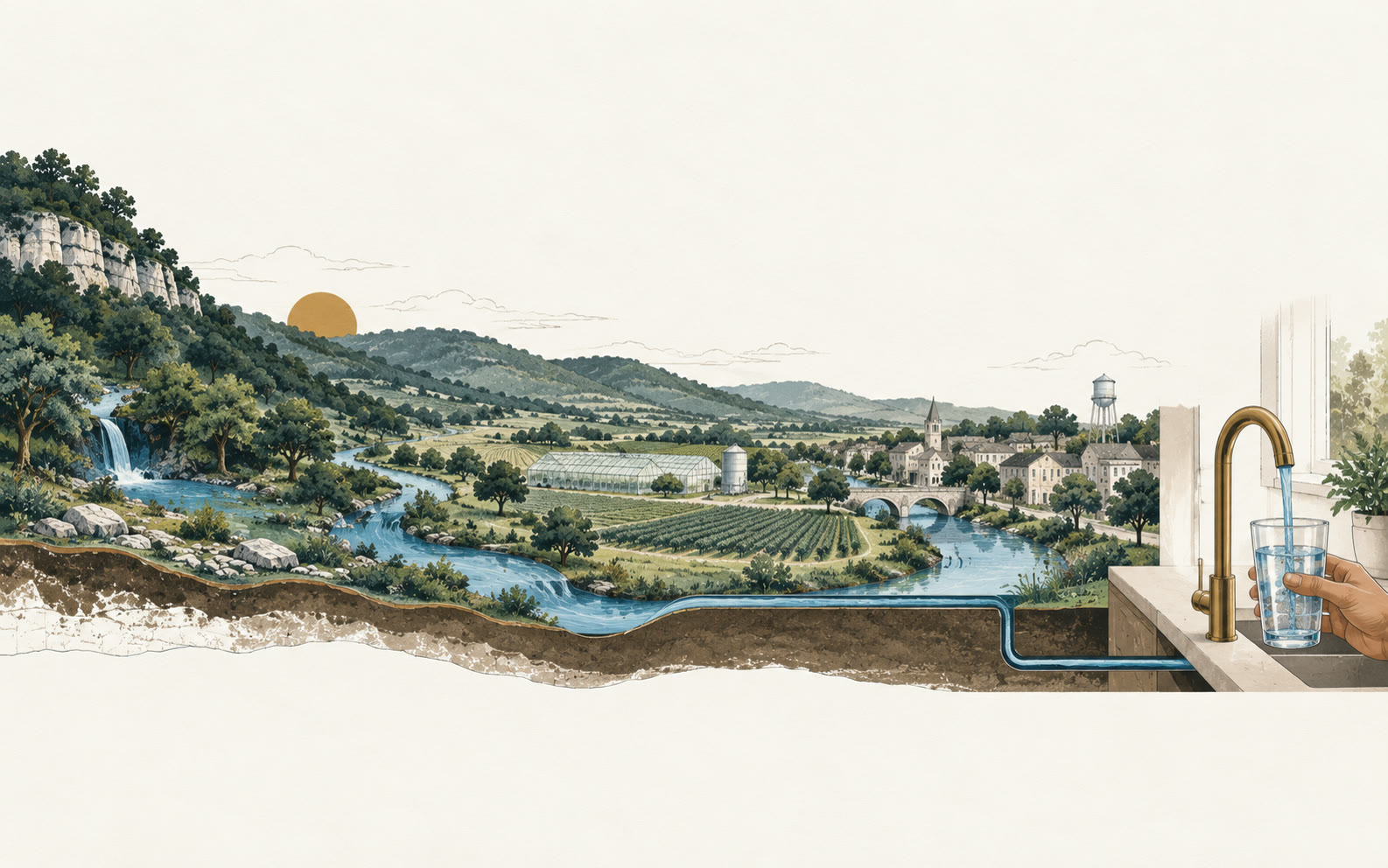
The science
The world’s leading health institutions are reaching the same conclusion.
In 2015, the Rockefeller Foundation–Lancet Commission gave this idea a name: planetary health — the health of human civilization together with the natural systems it depends on.
More recently, FAO, UNEP, WHO, and WOAH adopted a shared definition of One Health, an approach that treats the health of people, animals, and ecosystems as closely linked.
Heal the Earth, Heal Ourselves is our expression of that growing understanding, and our commitment to act on it where people live.
An old truth, finally named
For most of human history, the connection between the health of the land and the health of the people was not a theory. It was a lived reality. Farmers knew that depleted soil grew weak crops. Communities knew that polluted water made sick families. Healers knew that the body could not thrive in a poisoned environment.
What the Rockefeller Foundation–Lancet Commission did in 2015 was not invent a new idea. It gave a name to an old truth — and, crucially, it gave the world a framework for acting on it.
Planetary health is not environmentalism for its own sake. It is not a political position. It is a scientific reality: human health is inseparable from the health of the natural systems that sustain us. The air we breathe, the water we drink, the food we eat, the soil that grows it — these are not external factors. They are the foundation of human health.
The One Health approach, adopted by the Food and Agriculture Organization, the United Nations Environment Program, the World Health Organization, and the World Organization for Animal Health, extends this understanding further. It recognizes that the health of people, animals, and ecosystems are not three separate issues. They are one.
The fish tank analogy
The simplest way to understand planetary health is the fish tank.
Imagine a fish in a toxic tank. The water is polluted. Oxygen levels are dangerously low. The environment is slowly poisoning the fish. The fish becomes sick.
Modern medicine would take the fish out of the tank, treat its symptoms with pharmaceuticals, and put it back in the same toxic water. The fish would get sick again. The cycle would repeat. The fish would never truly heal because the environment never changed.
The solution is not to treat the fish. The solution is to clean the tank.
Restore the water. Increase the oxygen. Remove the toxins. Create an environment where the fish can naturally heal itself.
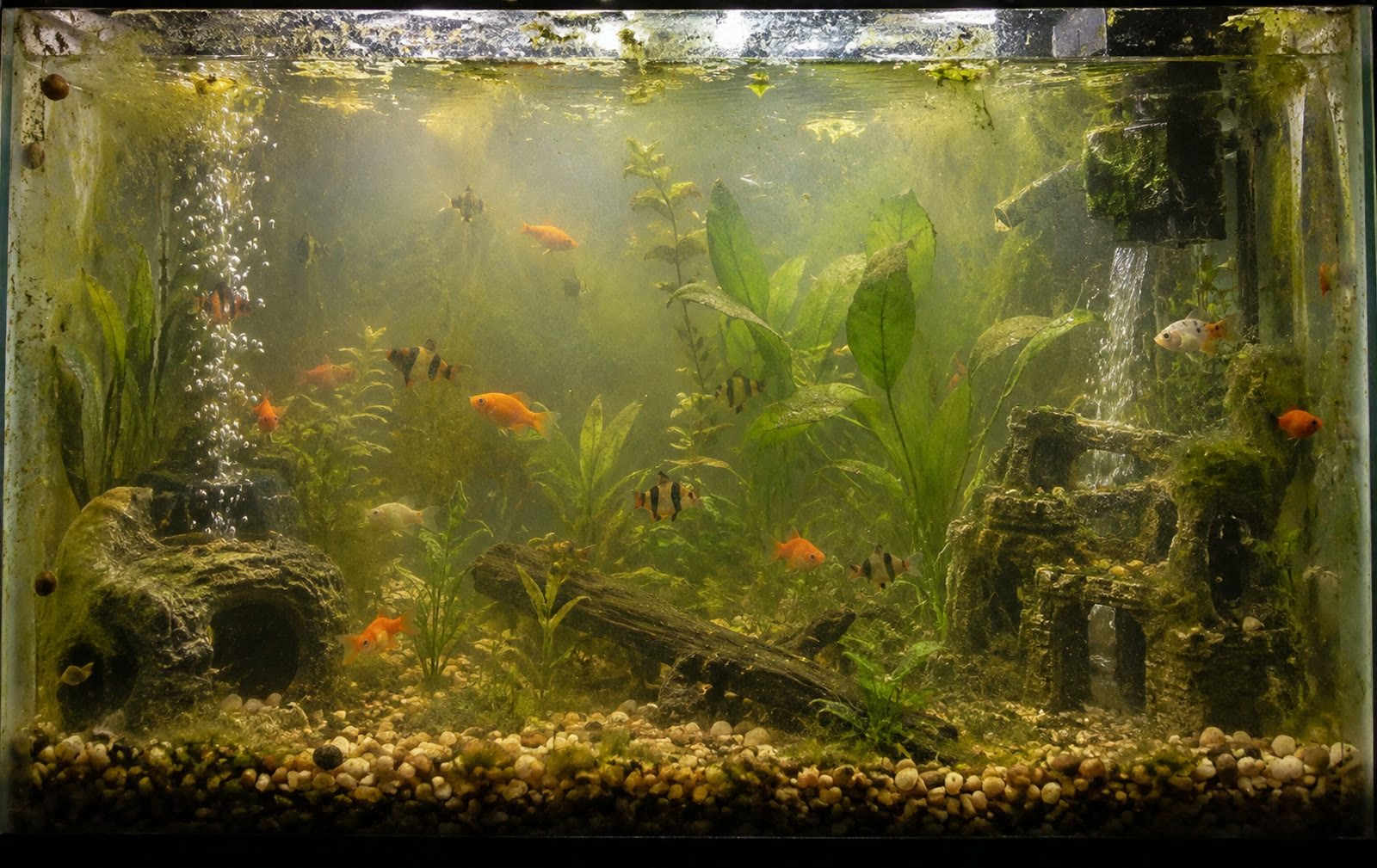

This is the core insight of planetary health. We are not just treating disease. We are treating the environment that causes disease.
The macro and the micro
Planetary health recognizes two interconnected systems:
The macro-terrain — the soil, water, air, food system, and economy that surround us. This is the environment we live in, the world our bodies interact with every moment of every day.
The micro-terrain — the cellular environment within the human body. This is where health is created or destroyed, where genes are expressed or silenced, where disease takes root or is healed.
These are not separate systems. They are one symbiotic system.
When the macro-terrain is toxic — when the soil is poisoned, the water contaminated, the air polluted, the food system designed for profit rather than nourishment — the micro-terrain suffers. Harmful genes are expressed. Chronic disease flourishes.
When the macro-terrain is healthy — when the soil is regenerated, the water pure, the air clean, the food nutrient-dense — the micro-terrain thrives. Beneficial genes are expressed. The body enters a regenerative state where it can heal itself.
This is the science of epigenetics: our genes are not our destiny. They are a control panel of potential instructions, and our environment acts as the electrician, flipping switches that determine which circuits are active and which remain dormant.
You cannot heal the micro-terrain without addressing the macro-terrain.
What you eat becomes your cells. What you breathe becomes your blood. Clean Earth creates clean cells. Healthy humans demand a clean Earth.
Why this matters for rural communities
Planetary health is not an abstract global concept. It is a practical framework for action — and it matters most where people live.
Rural America is a case study in what happens when planetary health is ignored.
- Healthcare: Nearly 760 rural hospitals are at risk of closure in 2027. When a hospital closes, the community loses its economic engine and its healthcare lifeline. Emergency care becomes inaccessible. Preventive care disappears. “Maternity care deserts” expand. The healthcare system becomes one of crisis management rather than health maintenance.
- Agriculture: Farm bankruptcies are up 46% year-over-year. Farmer suicide rates are 3.5 times the national average. Total farm debt is projected to reach $624.7 billion. The farmers who feed the nation are themselves starving — for economic stability, for mental health support, and for protection from the very chemicals they are forced to use.
- Food: 88.5% of rural tracts are categorized as food swamps — areas flooded with unhealthy, highly processed food options. Texas leads the nation: 1 in 5 residents face food insecurity. The result is a population that is simultaneously malnourished and obese, suffering from the dual burdens of hunger and chronic disease.
- Energy: Rural households face energy burdens exceeding 20% of household income — and in some counties, nearly 40%. Rural communities generate the power that fuels metropolitan areas, yet they cannot afford to keep their own lights on. The energy they create flows out, and the wealth flows with it.
- Water: Aquifers are being drained faster than they can be replenished. In Estancia, New Mexico, the land is sinking 7mm per year. Water that was found 50 feet below ground in 1952 now requires drilling up to 150 feet deep.
The result is a death spiral. As the hospital closes, the community loses its economic engine and its healthcare lifeline. Young people leave in search of opportunity, further eroding the tax base. Those who remain grow older and sicker. The community becomes a hollow shell of what it once was.
The PurEarth & PurHealth response
The PurEarth & PurHealth Rural Revitalization Project is planetary health in action.
We are not just building hospitals. We are building the conditions for health.
PurEarth restores the macro-terrain through:
- Renewable green energy that harnesses the Earth’s natural heat (geothermal carbon-negative, 24/7 baseload power) without depleting finite resources, or new technologies that uses water to generate electricity from hydrogen.
- Atmospheric water generation that creates pure water from the air, reducing or eliminating the need to drain aquifers or divert rivers.
- Controlled environment agriculture that produces 30X more food per acre with 99% less water and zero chemicals — more crop per drop.
- Hemp cultivation that sequesters carbon, cleans the soil through phytoremediation, provides renewable alternatives to petroleum-based products - and help farmers make over $1,600 per acre per year vs current 2026 prices of losing $150 per acre per year on commodities like corn, soy, or cotton.
- Regenerative economic systems that create high-paying jobs, keep wealth in the community, and reverse the brain drain that has drained rural America for generations.
PurHealth restores the micro-terrain through:
- The PurHuman Protocol — cellular terrain therapy that reverses degenerative disease and puts the body into a regenerative state in less than two hours.
- Rural Nonprofit Research & Training hospitals that provide regenerative healthcare, conducts clinical research on plant-based medicine, and provides training.
- The managed care model that flips the traditional healthcare incentive structure, rewarding health outcomes rather than procedure volume.
- Medical school partnerships that train the next generation of healthcare professionals in rural communities, creating a pipeline of providers committed to serving these communities.
The macro and micro environments are not separate. They are one system. To heal one, we must heal the other.
A rebellion against sick care
The current $4.5 trillion American healthcare model is designed to manage disease because there is no financial incentive to cure it. Why? Because a healthy patient is a lost customer.
The PurEarth & PurHealth blueprint is a rebellion against sick care.
We are not managing symptoms. We are creating health.
Oxygen that fuels our cells. Light that charges our mitochondria. Detox that clears our cellular terrain. Sovereignty that restores our communities.
This is planetary health in action. This is what it means to heal the Earth and heal ourselves.
The 2015 Rockefeller Foundation–Lancet Commission gave this idea a name. The One Health approach gave it a shared definition. PurEarth & PurHealth are giving it a home — in the rural communities that have been left behind, in the soil that has been depleted, in the water that has been contaminated, in the bodies that have been poisoned.
Health is not a mystery. It is a return.
- A return to the understanding that human health and environmental health are one.
- A return to the knowledge that when we heal the land, we heal ourselves.
- A return to the truth that has always been there — waiting for us to remember.
Heal the Earth, Heal Ourselves.
The PurEarth Foundation is committed to reversing the collapse of rural America by restoring both the macro environment and the micro environment. To learn more about the PurEarth & PurHealth Rural Revitalization Project, visit Partnerships in Action.
Sources
- Rockefeller Foundation–Lancet Commission on Planetary Health (2015)
- FAO, UNEP, WHO, WOAH — One Health Joint Plan of Action
- Center for Healthcare Quality and Payment Reform — 2025 Rural Hospital Vulnerability Report
- American Farm Bureau Federation — 2025 Farm Income Analysis
- USDA — Food Desert Data
- Federal Reserve Economic Data — Farm Debt & Bankruptcy Statistics
- Texas Energy Market Data (2019–2025)